होली का त्योहार – रंगों, प्रेम और बुराई पर अच्छाई की जीत का प्रतीक
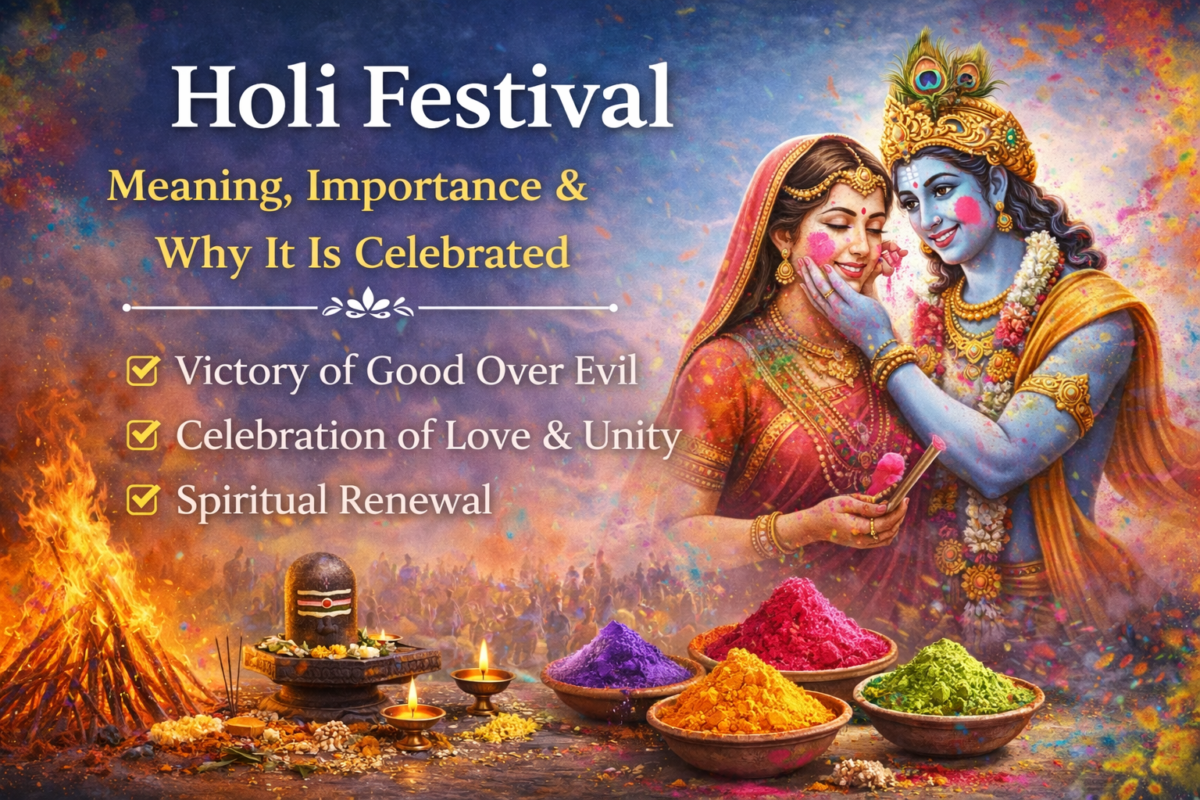
Holi is one of the most vibrant and joyful festivals celebrated across India. Known as the Festival of Colors, Holi symbolizes victory of good over evil, arrival of spring, and celebration of love and unity.
It is celebrated on the full moon day (Purnima) of the Phalguna month, usually in March. The festival lasts for two days — Holika Dahan and Rangwali Holi.
What Is Holi? (होली क्या है?)
Holi is an ancient Hindu festival mentioned in Puranic texts. It marks:
- The end of winter
- The beginning of spring (Vasant Ritu)
- A time of renewal and positivity
The festival is deeply rooted in mythology, culture, and spiritual symbolism.
Why Is Holi Celebrated?
होली क्यों मनाई जाती है?
Holi is mainly celebrated for two important reasons:
1️⃣ Victory of Good Over Evil (Holika Dahan)
According to Hindu mythology, King Hiranyakashipu wanted everyone to worship him instead of Lord Vishnu. However, his son Prahlad remained a devoted follower of Lord Vishnu.
To punish Prahlad, the king’s sister Holika, who had a boon that fire could not harm her, sat in fire with him. But due to divine protection, Prahlad survived and Holika was burnt.
👉 This event is remembered as Holika Dahan, symbolizing the destruction of evil.
2️⃣ Celebration of Love – Radha & Krishna
In Vrindavan and Mathura, Holi is associated with Lord Krishna and Radha.
It is believed that Krishna playfully applied colors on Radha, which later became a tradition.
This represents:
- Love
- Unity
- Breaking social barriers
Importance of Holi in Hindu Culture
होली का धार्मिक और सांस्कृतिक महत्व
Holi is more than just colors and celebration. It teaches us:
- To forgive and forget past conflicts
- To remove negativity from life
- To strengthen relationships
- To welcome happiness and prosperity
Spiritually, Holi reminds us that truth and devotion always win over ego and arrogance.
Rituals of Holi
🔥 Holika Dahan (Day 1)
- Bonfire is lit in the evening
- People perform puja around the fire
- Wheat, coconut, and grains are offered
- Families pray for protection and prosperity
यह बुराई के अंत और नई शुरुआत का प्रतीक है।
🎨 Rangwali Holi (Day 2)
- People play with colors (gulal)
- Visit friends and relatives
- Share sweets like gujiya and thandai
- Celebrate with music and dance
This day spreads joy and positivity everywhere.
Spiritual Meaning of Holi
Holi also represents:
- Burning inner negativity (ego, anger, jealousy)
- Renewal of mind and soul
- Embracing positivity and new beginnings
Many people also perform special puja or havan to remove obstacles and negative energy from their lives.
Modern Relevance of Holi
In today’s busy world, Holi gives us a chance to:
- Reconnect with family and friends
- Strengthen emotional bonds
- Celebrate unity beyond caste, religion, or social status
It is truly a festival of harmony and happiness.
Conclusion
Holi is not just about colors — it is about faith, forgiveness, and fresh beginnings. The story of Prahlad teaches us devotion, and the playful colors of Krishna teach us love and unity.
If you wish to perform Holika Dahan Puja or special Holi rituals at home, AapkaPandit.com provides experienced pandits who conduct puja with proper vidhi and mantras for spiritual blessings.
✨ May this Holi bring happiness, prosperity, and vibrant colors into your life. ✨